Meatspin.com

 Loading...
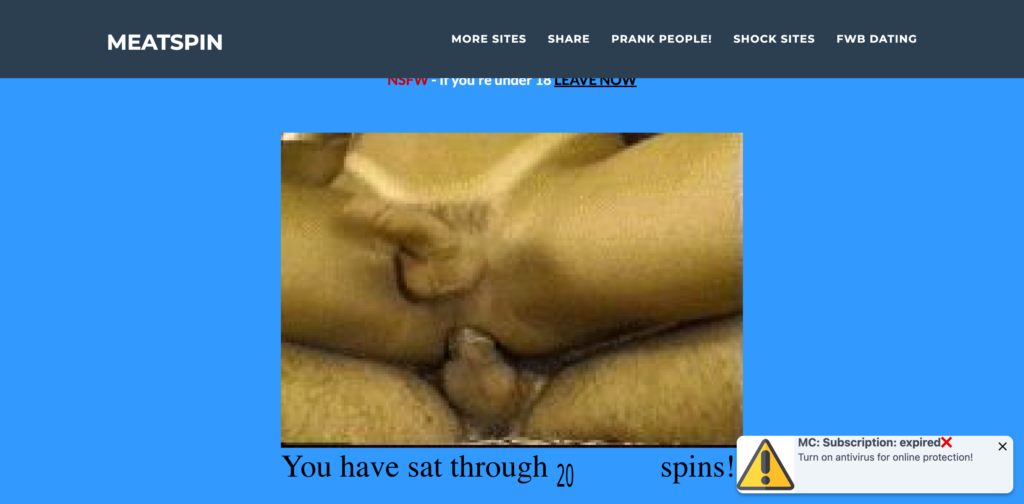
You land on Meatspin and there’s no buildup, no introduction, no attempt to ease you in. The site throws its concept at you immediately. It feels less like a traditional adult platform and more like an old internet prank page that exists purely to surprise people who weren’t expecting it.
The design is extremely simple. A single page, bold text links, basic colors — nothing modern or polished. Navigation isn’t really navigation in the usual sense. You scroll, click oversized links, and get redirected to other shock-style or joke sites that follow the same chaotic logic.
That’s the core idea here. Meatspin isn’t about browsing categories or exploring a library. It’s about reaction. The site belongs to a group of early internet “shock pages” that were created to catch viewers off guard or be shared as pranks between friends. Because of that, structure feels messy on purpose.
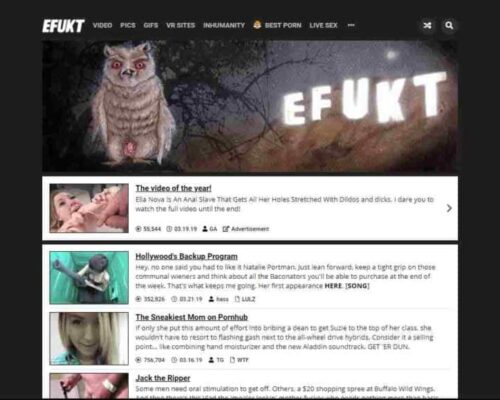
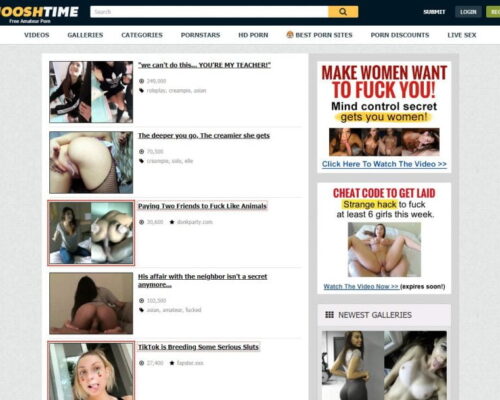
Most links lead outward. You move from one strange clip or parody page to another, often with similar layouts and the same mix of humor, absurdity, and explicit material. Ads appear frequently, sometimes more noticeable than the content itself, which reinforces that rough, old-web atmosphere.
The menu mainly acts as a hub to other prank pages, shock sites, and various adult-adjacent tools or promotional pages. Nothing feels curated. It’s more like a directory of chaotic internet corners gathered in one place.
Technically, the site is lightweight and loads instantly, but there isn’t much functionality beyond clicking and leaving. There’s no real catalog, no player features to explore, and no reason to stay long unless you’re specifically there for the joke or nostalgia.
Meatspin works as a relic of early internet culture — a page built around shock value, reactions, and sharing links for the sake of surprise. It’s less a destination and more a moment people encounter, send to friends, and move on from.